
AAM and BPOM Advance Responsible Medicine Management Through ABSO Initiative
PT Anugrah Argon Medica (AAM) is strengthening its collaboration with Indonesia’s National Agency of Drug and Food Control (BPOM) to promote medicine safety and responsible disposal, combining rigorous pharmaceutical distribution practices with public access to medicine collection facilities.
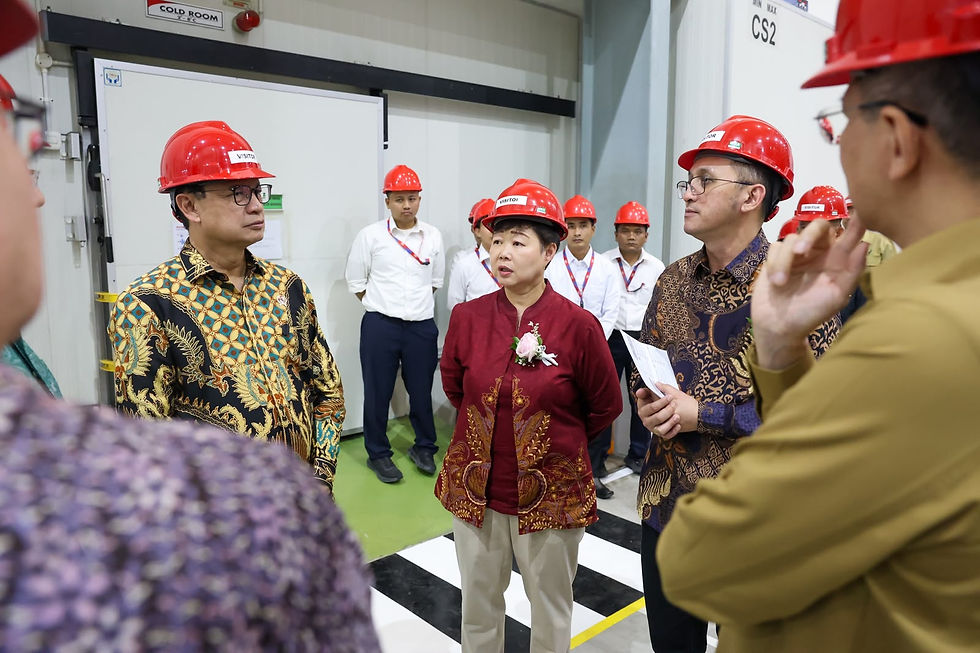
The collaboration was highlighted during a visit by BPOM Head Prof. Taruna Ikrar and his delegation to AAM’s National Distribution Center (NDC) in Cikarang on Tuesday. The visit included a review of the center’s Warehouse Management System (WMS) and its implementation of Good Distribution Practices (GDP), which help maintain medicine quality throughout the distribution process.
For pharmaceutical distributors, maintaining product quality involves more than moving medicines from one location to another. Appropriate storage conditions, accurate inventory management, product traceability, and reliable delivery processes are essential to ensuring that medicines reach healthcare facilities in suitable condition. AAM applies these practices to support the availability of medicines and medical devices across the healthcare distribution network it serves.
“Maintaining medicine quality and safety throughout the distribution chain is a core responsibility of pharmaceutical distributors. AAM is committed to working with BPOM to strengthen Good Distribution Practices and support initiatives that promote responsible medicine management,” said Juliwaty, President Director of AAM. “Through this collaboration, we aim to ensure that our distribution practices meet applicable standards while contributing to broader public health efforts.”
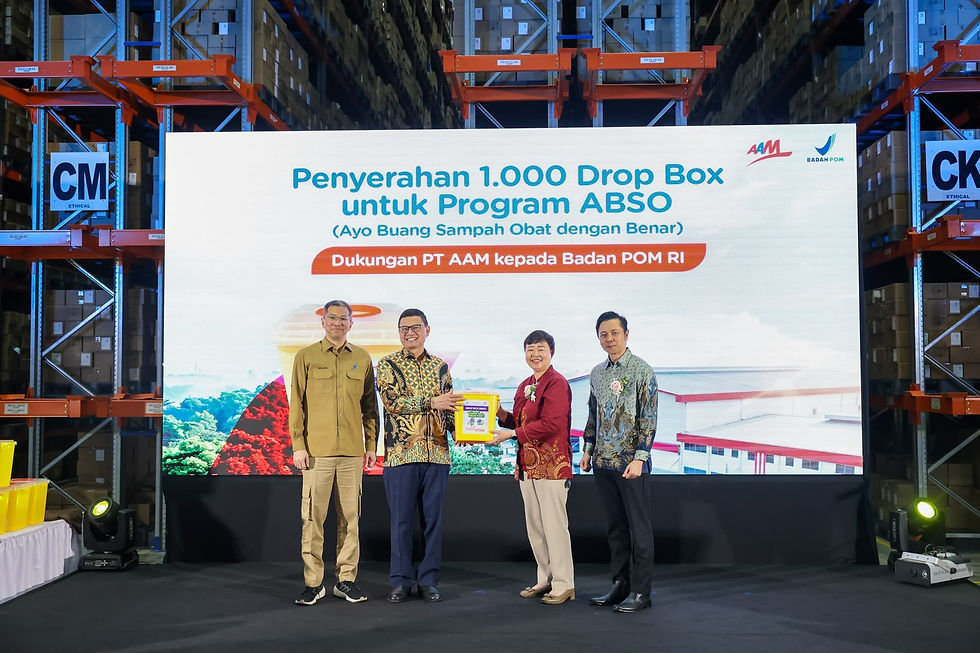
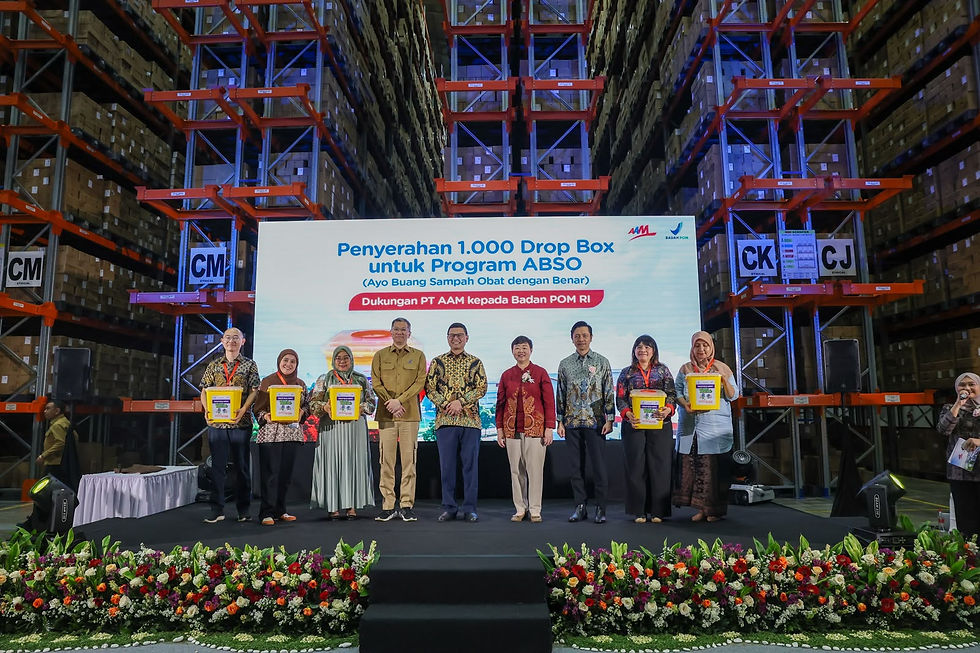
The visit also marked a step forward in AAM’s support for BPOM’s Ayo Buang Sampah Obat (ABSO) initiative, which encourages the proper disposal of unused and expired medicines. Juliwaty symbolically handed over an ABSO collection box to Prof. Taruna Ikrar, who then presented it to a pharmacy representative. The facility will provide a designated collection point where members of the public can return medicines that are no longer needed or have expired.
“Partnerships between regulators and industry are important to strengthening medicine oversight and encouraging responsible practices among the public. Through ABSO, we want more pharmacies to become accessible collection points for unused and expired medicines, making proper disposal easier for communities,” Prof. Taruna Ikrar said.
Providing designated collection points helps address an often-overlooked aspect of medicine safety: what happens after medicines are no longer needed. Rather than disposing of them with ordinary household waste, people can use the facilities provided through participating pharmacies to manage these products more appropriately.
Responsible medicine use is also closely linked to the global challenge of antimicrobial resistance (AMR). The inappropriate use of antibiotics can contribute to the development and spread of resistance, making public awareness, appropriate prescribing practices, and cross-sector cooperation important parts of the response.
Indonesia’s 2023 Health Survey (Survei Kesehatan Indonesia or SKI) found that 41 percent of antibiotic users obtained antibiotics without a doctor’s prescription, highlighting the need to strengthen awareness and promote more responsible antibiotic use. The United Nations’ 2024 Political Declaration of the High-level Meeting on Antimicrobial Resistance similarly called for coordinated global action under the One Health approach, which recognizes the links between human, animal, and environmental health.
In support of these efforts, AAM has conducted technical guidance sessions for pharmacists across 22 cities in Indonesia. The sessions aim to strengthen pharmaceutical practice, including knowledge of prudent antibiotic use and measures to prevent antimicrobial resistance.
By combining distribution standards, responsible medicine disposal, and professional education, AAM continues to support collaborative efforts to improve medicine safety and contribute to better public health outcomes.
Also attending the visit were Dr. William Adi Teja, MD, BMed, MMed, Deputy for Drug, Narcotics, Psychotropics, Precursors, and Addictive Substances Control at BPOM; Kirwanto, Senior Food and Drug Control Officer at BPOM; and Raditya Sapta Aryadi, S.Farm., Apt., Head of the Karawang District Office of the Indonesian Food and Drug Authority (Loka POM).